If you've ever sat in someone's car and heard music that sounded alive — vocals floating in front of the dashboard, kick drums you could feel in your chest, cymbals shimmering instead of hissing — and then climbed back into your own car and felt like you were listening through a tin can, this guide is for you.
Modern factory audio systems are better than they were ten years ago. They're also still designed to be the cheapest box that ships with the car. Manufacturers know that 80% of buyers will never push the volume past 60%, so they tune around that. The result: muddy bass, harsh treble, no center image, and almost no dynamic range. The good news is that you don't have to live with it. With the right plan, a few thousand dollars (or even a few hundred) gets you sound that genuinely competes with a home hi-fi rig.
This is the upgrade roadmap we walk every customer through at Audio Playground. We'll cover what to upgrade first, what to skip, how the pieces work together, and how to avoid the most common mistakes that turn a "system" into a stack of expensive parts that sound worse than stock.
Why factory audio always falls short
Three things hold factory sound back, and you can't fix any of them with the volume knob.
First, the speakers are built to a price point measured in dollars per pair. Cones are thin paper, surrounds are foam that crumbles in five years, and magnets are tiny. They can play music — they cannot move the air a real driver needs to.
Second, the amplifier in your head unit is rated optimistically. The "50 watts x 4" sticker is peak power into a perfect load on a workbench. In your car it's closer to 15 watts RMS per channel, and most of that is gone by the time the signal reaches the speaker through factory wiring.
Third, the tuning is generic. A flagship luxury sedan gets dozens of hours of acoustic engineering for its sound system. A mid-trim crossover gets a copy-paste EQ curve that's "fine" everywhere and great nowhere.
Fix any one of those and you'll hear a difference. Fix all three together and you'll wonder why you waited.
Level 1: The speaker swap (about $400–$900 installed)
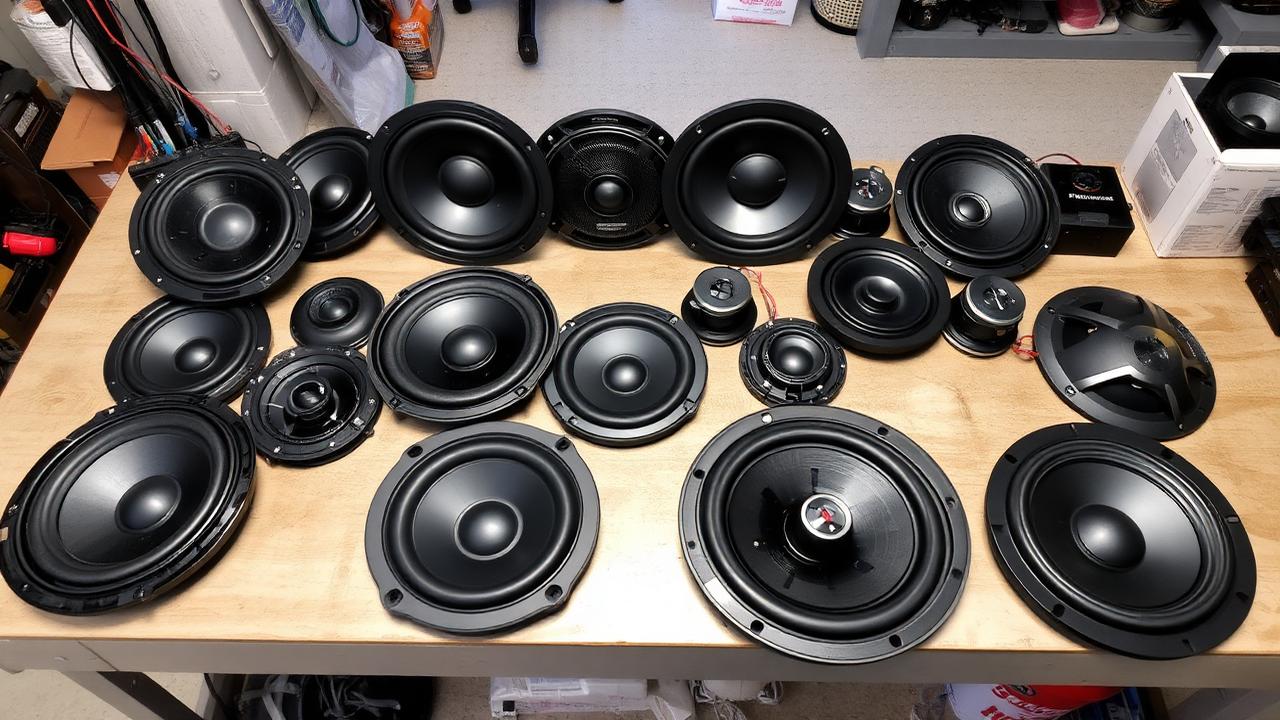
If you do exactly one upgrade, do this one. Swapping the factory front door speakers for a quality component set is the single highest-impact change you can make.
A component set splits the driver into two pieces: a midbass that lives in the door and a tweeter that mounts up high, usually in the A-pillar or sail panel. That separation does two important things. It puts the high frequencies closer to ear level (so vocals and instruments sound like they're coming from in front of you, not from the floor), and it lets each driver focus on the range it does best.
Look for sets with these specs:
- Sensitivity of 88 dB or higher — efficient speakers play louder on the same power
- RMS power handling between 60 and 100 watts — enough to take a modest amp later
- Silk or soft-dome tweeters if you find factory systems harsh, aluminum domes if you want detail and air
- Real crossovers in the box, not parallel resistors
Brands we install constantly: Focal, Hertz, JL Audio, Morel, Audison. We avoid most of the names you see on big-box retailer shelves — the model numbers change quarterly and the quality varies wildly.
Pair the front upgrade with butyl sound deadening on the door skin (inner and outer) and you'll get cleaner midbass than most people think the car is capable of. Skipping deadener and then complaining your new speakers "sound thin" is the most common mistake we see.
You can leave the rear speakers stock for now. In most cars the rear stage is filler; the front is where the music lives.
Level 2: Add an amplifier (about $700–$1,500 installed)
Your new speakers will sound better than stock on factory power. They will sound correct with a proper amp.
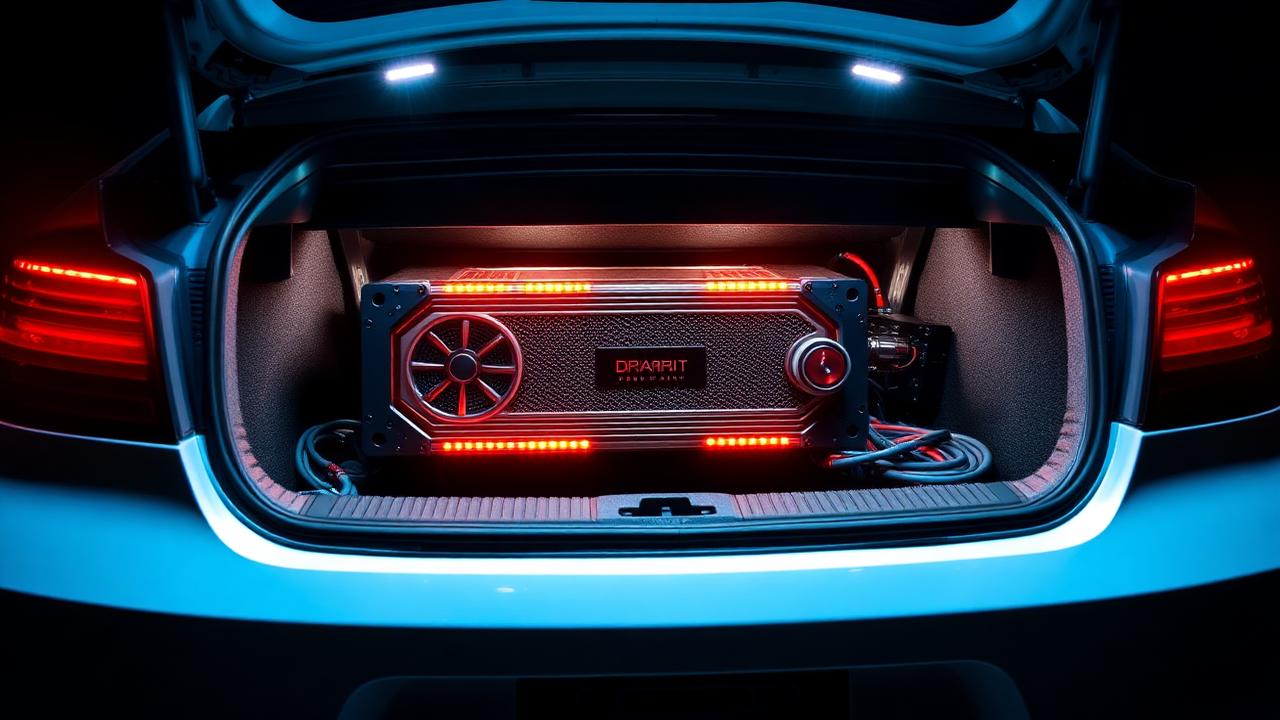
A clean four-channel amplifier solves three problems at once. It gives the front speakers headroom so they don't distort at the top of the volume knob, it lets you fade more aggressively to the front for a real soundstage, and it acts as a clean preamp signal source for the subwoofer you're going to add next.
Pick an amp with these traits:
- Class D for efficiency (less heat, smaller chassis, easier to mount)
- RMS power matched to your speakers — 75 watts RMS to a 60-watt RMS speaker is fine, 200 watts RMS to a 60-watt speaker is a recipe for melted voice coils
- High-level inputs with auto-turn-on if you're keeping the factory head unit
- A built-in crossover so you can high-pass the doors at 60–80 Hz and let the sub handle the rest
When the amp goes in, this is the right time to upgrade speaker wire to 14-gauge OFC and run a real four-gauge power cable from the battery with a fuse within 18 inches of the positive terminal. Cheaping out on power and ground wire is the fastest way to introduce noise — engine whine, alternator buzz, ground hum. We see it constantly when we redo other shops' work.
Level 3: Add a subwoofer (about $800–$1,800 installed)
This is the moment your car stops sounding like "a car with nice speakers" and starts sounding like a real audio system. A subwoofer doesn't just add low end — it takes the entire low-frequency workload off your door speakers, which means they can play mids and highs cleaner and louder without straining.
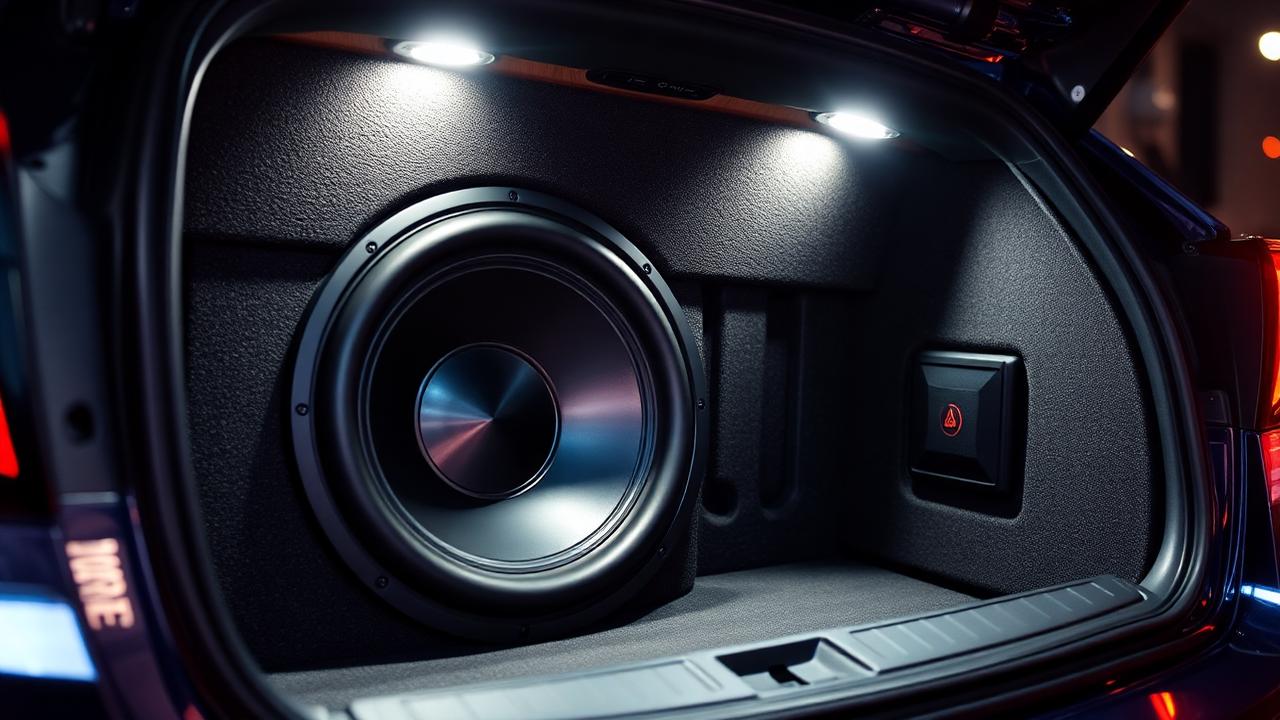
For most people, the right answer is a single 10" or 12" sub in a sealed enclosure powered by a 500–800 watt RMS monoblock amp. That setup hits hard enough to feel, sounds musical on every genre, and doesn't take over your trunk.
A few decision points:
- Sealed vs ported: sealed is tighter and more musical, ported is louder and hits harder on hip-hop and EDM. If you listen to a mix of genres, go sealed. If you mostly listen to one bass-heavy genre and you want maximum SPL, go ported with a properly designed box.
- Shallow-mount vs traditional: shallow subs are great for under-seat boxes in trucks and tight spots, but a traditional sub in a proper enclosure will always move more air for less money.
- Single 12 vs dual 10s: in the same box volume, two 10s have more cone area and usually hit harder; a single 12 is cheaper and easier to wire. Both are valid.
Whatever you pick, the box matters more than the sub. A $300 sub in a properly tuned enclosure will embarrass a $700 sub in a generic prefab box. This is where buying the prebuilt bass package from the warehouse store goes wrong every single time.
Level 4: Replace the head unit (or don't)
This step used to be automatic. In 2026 it's optional, and sometimes it's a bad idea.
Modern factory infotainment systems are deeply integrated with the car. They run climate controls, backup cameras, lane-keep warnings, steering-wheel volume, and so on. Ripping them out costs you features and often introduces ugly trim.
The better approach for most modern vehicles is to keep the factory head unit and use a digital signal processor (DSP) to take the factory signal, undo the factory tuning, and feed your aftermarket amps a clean, full-range signal. AudioControl, Helix, and Audison make excellent DSPs for this. We'll explain the tuning side in a minute.
Replace the head unit when:
- Your car is old enough that the radio is just a radio (pre-2015 or so)
- You want wireless CarPlay / Android Auto and don't have it (separate guide on this one)
- The factory unit doesn't have preouts or a clean digital output and you don't want a line-output converter
Otherwise, leave it alone and add a DSP.
Level 5: DSP tuning — the unlock most people skip
This is the upgrade nobody talks about and the one that matters the most.
A DSP is a small computer that lets a trained tuner correct for everything that's wrong with your car as a listening environment: speakers that aren't equidistant from your ears, reflections off the windshield, mid-bass cancellation from door cavities, factory EQ that boosts mud and rolls off air. With a calibration microphone and a few hours, a good tuner can turn an above-average install into something that genuinely competes with a home reference system.
The shortlist of what tuning fixes:
- Time alignment — delays each speaker so the sound arrives at your ears at the same time, creating a real center image
- Crossover slopes — splits frequencies between drivers without phase cancellation
- Per-driver EQ — flattens response so no frequency is missing or peaky
- Target curve — sets the overall tonal balance to your taste (warm, neutral, bright)
We've watched customers literally tear up the first time they hear a properly tuned system in their own car. That's not marketing — it's that big a change.
A realistic budget by tier
A few common builds, all installed, with real numbers from our shop in 2026:
- Daily driver, sounds-much-better-than-stock: $1,400–$1,800 for component fronts, sound deadening, 4-channel amp, and basic DSP setup
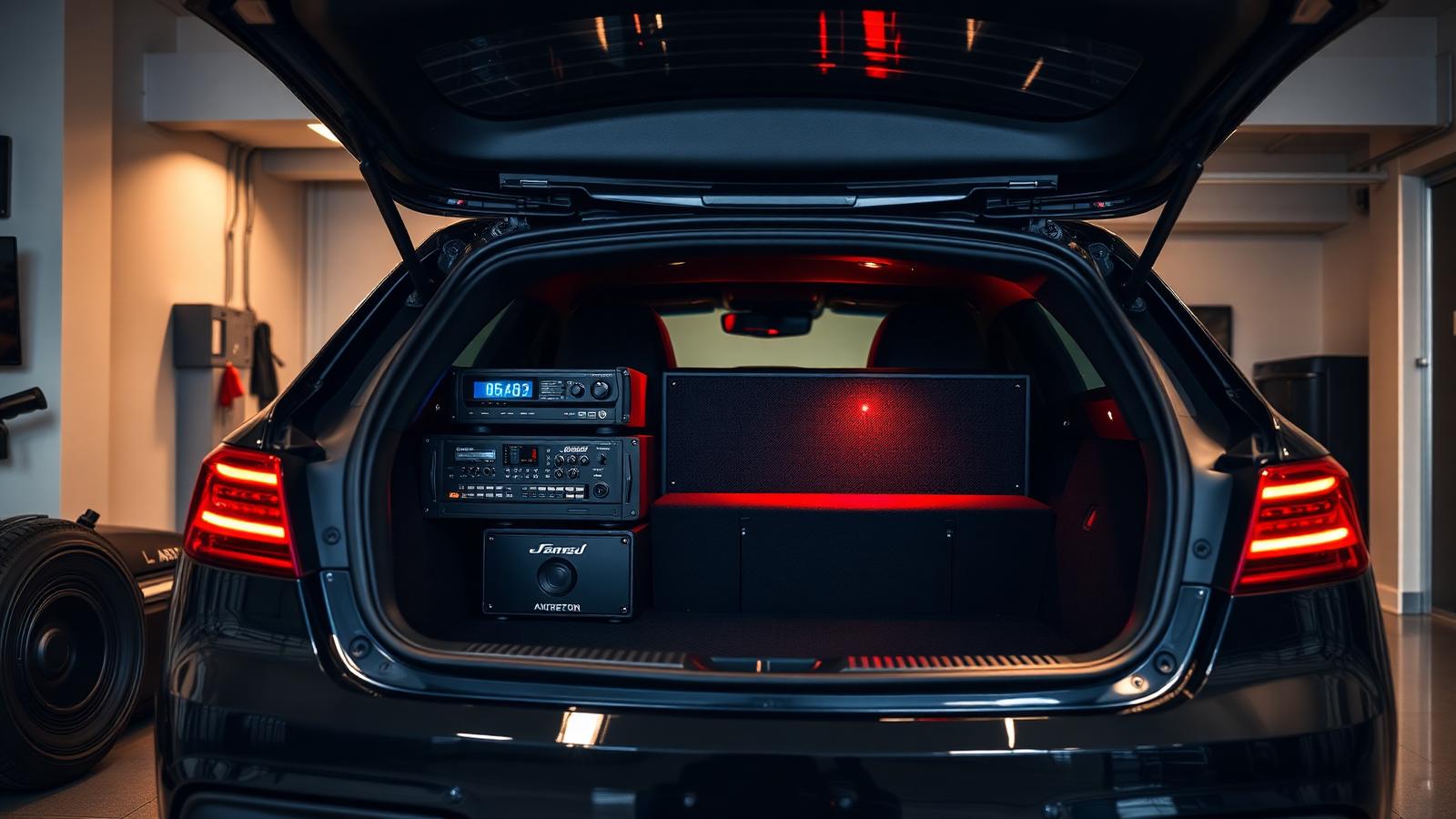
- Music lover, takes it seriously: $3,000–$4,500 for component fronts and rears, deadening on all four doors, 5-channel amp, 10" or 12" sub in a sealed box, and a proper DSP tune
- Reference build: $7,000–$15,000+ for top-tier components, dual amps, an active 3-way front stage, custom-built sub enclosure, full DSP, and 8–12 hours of tuning time
The first tier is what most of our customers end up with. It's the sweet spot where every dollar buys obvious improvement.
Mistakes that ruin good gear
We could rewrite this whole article as a list of these. Five worth repeating:
- Buying gear before knowing the install. A $1,200 amp doesn't fit under the seat of every car. Plan first.
- Mixing brands at the drivers. A Focal tweeter and a Hertz midbass in the same set will fight each other. Buy matched components.
- Cheaping out on wire. Bad ground = noise. Bad power = clipping. The wire kit is not the place to save $80.
- No deadening. Speakers play into a metal can. Deadening turns that can into an enclosure.
- Skipping the tune. A flat factory EQ with $5,000 of new gear sounds worse than a properly tuned factory system. Tune it, every time.
How to start without overthinking it
If you're not sure where to begin, do this in order: book a 20-minute consult, bring the music you actually listen to on the platform you actually use, and let a tuner sit in your car and listen with you. We don't sell from a catalog — we listen to your factory system first, ask what bothers you about it, and then build a phased plan that fits your budget and your car. Plenty of customers start with a Level 1 speaker swap, live with it for six months, and come back for the amp and sub when they're ready.
Sound is personal. The right system for a touring musician who listens to studio mixes through Tidal Hi-Fi is different from the right system for a contractor who plays Spotify country at jobsite volume. Both deserve something that sounds great. That's the whole point of doing this right.