Walk into ten tint shops in the Midwest and ask "what film should I get?" and you'll get ten different answers, most of them shaped by whatever distributor that shop happens to carry. The truth is, the difference between cheap dyed film and premium ceramic film is enormous — and the difference between mid-tier ceramic and top-tier nano-ceramic is much smaller than the marketing makes it sound. Knowing where the real value sits will save you a few hundred dollars and a lot of regret.
Here's the honest breakdown of every film type, what they actually do, and how to pick the right one for South Dakota weather.
What window tint actually does (and doesn't)
Before comparing film types, let's get clear on what tint is for. A good window film does five things:
- Blocks UV light (UVA and UVB) — protects skin and prevents interior fading
- Rejects infrared heat — keeps the cabin cooler in summer
- Reduces glare — easier on the eyes in bright sun
- Adds privacy — visual blocking from outside
- Holds glass together on impact — small bonus safety feature
It does not "cool the air." It reduces the amount of heat energy entering the cabin in the first place, which means your AC has less work to do and your interior surfaces don't get oven-hot when parked. The difference at the dashboard surface temperature can easily be 30°F between a tinted and untinted car on a sunny July afternoon.
The three main film types
Every window film falls into one of three technology categories, regardless of brand marketing.
Dyed film
The cheapest and oldest technology. Multiple layers of dyed polyester laminated together. The color (and most of the heat rejection) comes from a chemical dye.
Pros: very affordable, decent visual privacy, easy to install.
Cons: rejects only 35–45% of total solar energy at best (mostly visible light, not infrared), fades to purple in 3–5 years under SD sun, no real UV blocking beyond the basic, and the color shifts over time.
If you see "limo tint" on a 10-year-old car that looks purple and bubbly, that's dyed film. Cost: $150–$300 for a full car install.
We rarely recommend dyed film anymore. The performance is poor and the lifespan is short enough that you'll redo the car twice in the time a quality film would have lasted once.
Carbon film
A middle-ground technology. Instead of dye, the color comes from carbon particles embedded in the film. Carbon doesn't fade like dye does and reflects more infrared.
Pros: better color stability than dyed (no purple fade), 40–55% total solar rejection, blocks more IR than dyed, lasts 7–10 years easily.
Cons: less IR rejection than ceramic, slightly less optical clarity, can look a bit "flat" compared to premium films.
A solid middle option. Cost: $300–$500 for a full car install.
Ceramic film
The current standard for quality installs. Uses nano-ceramic particles instead of dye or carbon to block infrared and UV. Optically clear in the manufacturing process — most ceramic films you can choose between very subtle and very dark shades depending on your VLT (visible light transmission) preference.
Pros: 50–75% total solar rejection, often 90%+ infrared rejection, 99% UV rejection, true color stability for the life of the vehicle, no interference with radio / GPS / cell / FOB signals, optically clearer than dyed or carbon.
Cons: more expensive. That's about it.
Cost: $500–$900 for a full car install, depending on brand and VLT.
This is what we install on probably 80% of the cars that come through. The heat-rejection difference is something you feel within minutes of getting in the car on a hot day, and the lifespan means most people only ever buy it once.
Nano-ceramic / IR-blocking premium ceramic
The top of the market. Brands like 3M Crystalline, Llumar IRX, XPEL XR Plus, and Suntek CIR Series push ceramic technology farther — sometimes by using multiple ceramic layers, sometimes by adding selective IR-blocking nano-coatings.
Pros: 65–80% total solar rejection, 95%+ infrared rejection, optical clarity comparable to factory glass, indistinguishable from standard ceramic visually.
Cons: cost. These films run $800–$1,500 for a full car install.
Is it worth it? For most drivers, no — the jump from standard ceramic to premium nano-ceramic is 5–10% additional heat rejection. For drivers with long commutes in direct sun, anyone with leather interiors that get hot to the touch, EV drivers who want to extend battery range by reducing AC load, or anyone with sensitivity to heat, it's a real upgrade.
What the percentages actually mean
You'll see three numbers on every tint spec sheet:
- VLT (Visible Light Transmission): percentage of visible light that passes through. Lower = darker. A "35% VLT" film lets 35% of visible light through.
- TSER (Total Solar Energy Rejected): percentage of total solar energy blocked. This is the number that correlates to how cool the car stays. Higher = better.
- IRR (Infrared Rejection): percentage of infrared specifically blocked. IR is the wavelength you feel as heat on your skin.
A common mistake is shopping by VLT alone. A 20% VLT dyed film is dark but rejects maybe 40% of solar energy. A 50% VLT ceramic film looks nearly clear and rejects 60% of solar energy. The lighter ceramic film actually keeps the car cooler.
For comfort, prioritize TSER. For appearance and privacy, set the VLT you want. Then find a ceramic film at that VLT.
South Dakota tint law refresher
A quick recap of what's legal in 2026:
- Windshield: clear, plus a 6-inch non-reflective tint strip across the top (the "eyebrow")
- Front side windows: minimum 35% VLT
- Rear side windows: any darkness
- Rear windshield: any darkness
- Reflectivity: less than 20% on front side and windshield
Medical exemption certificates allow darker fronts for individuals with documented conditions. Police, ambulances, and some commercial vehicles have additional allowances.
What this means in practice: most customers get a legal 35% VLT (or 50% VLT for maximum clarity) on the front sides, and choose between 20%, 15%, or 5% on the rears for privacy.
Signal interference: the metalized film problem
Older "reflective" or metalized films (the ones with a slightly metallic look) contain microscopic metal particles that block more heat — and also block radio signals. People who installed these in the 2000s often had issues with cell reception, FM radio, key fob range, GPS accuracy, satellite radio, and tire pressure monitor signal.
This is no longer a concern with ceramic films. Ceramic particles are not conductive, so no signal interference. If your installer is still selling metalized film in 2026, find a different shop.
Front windshield tint: yes, it's worth it
This is the upgrade most customers don't think about and then love when they get it. A clear or near-clear ceramic film on the front windshield (50% or 70% VLT) blocks 90%+ of infrared heat without changing the look of the car. In a sun-belt state it's a huge comfort upgrade; in SD it's a real benefit on those 95°F July afternoons and a meaningful AC load reduction for EV drivers.
It also blocks 99% of UV, which protects the dashboard, seats, and steering wheel from sun damage. We've seen 10-year-old cars with windshield-tinted interiors that look like they're 2 years old, sitting next to identical cars whose dashes are cracked and discolored.
Cost: $200–$400 added to a full-car install.
Installation matters as much as film
Two installers can use the exact same brand of film and produce wildly different results. What separates good install from bad:
- Clean room or dust-controlled bay — no airborne dust during squeegeeing
- Computer-cut film patterns — perfect fit at every edge with no razor cuts on the inside of glass
- Slip solution mixed correctly — too much soap leaves residue, too little causes premature edge lift
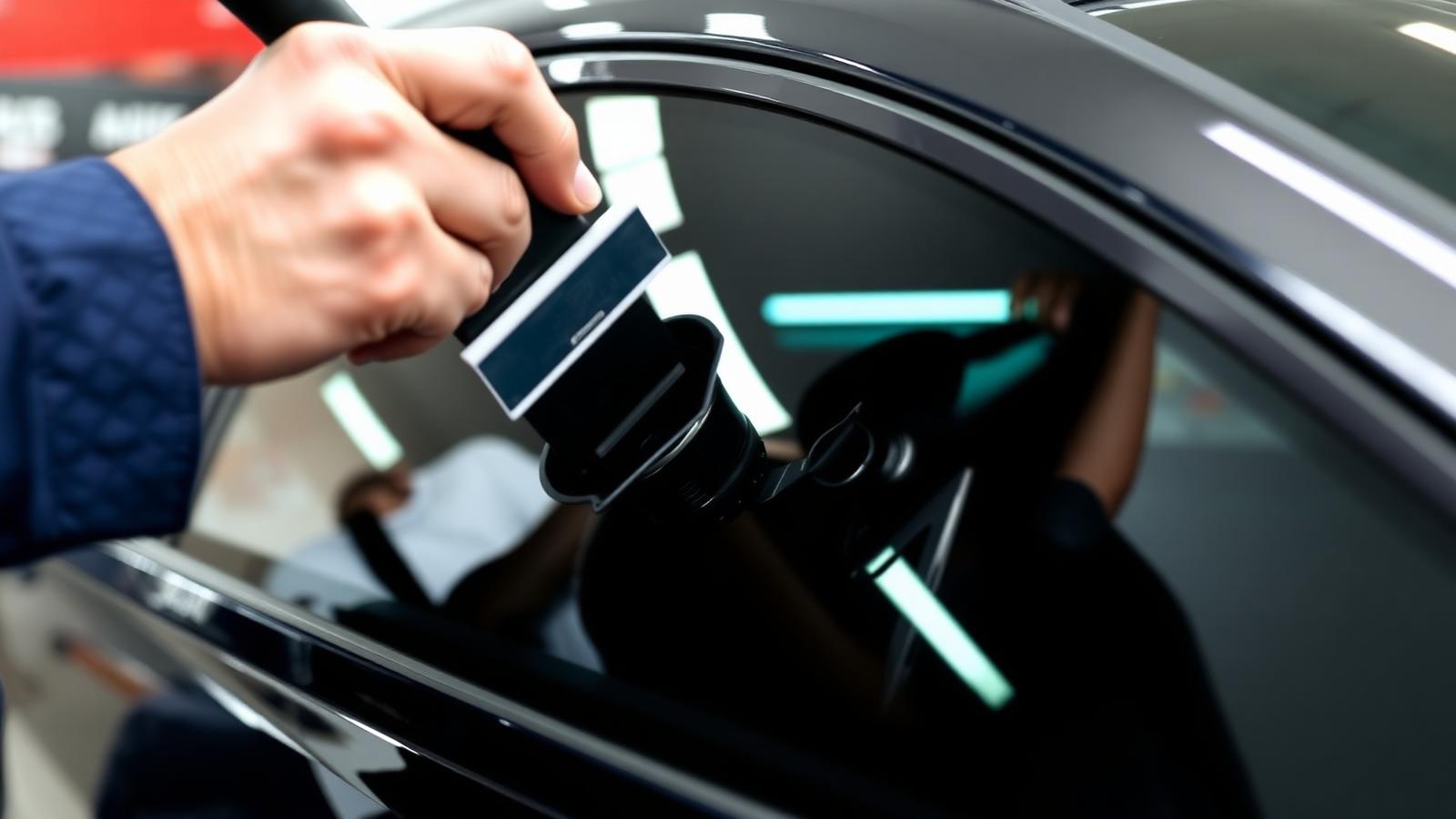
- Squeegee technique that doesn't trap moisture under the film
- Heat shrinking done with a proper heat gun on curved windows, not a hair dryer
Signs of a bad install you can spot in the first week:
- Visible bubbles that don't disappear in 7–10 days
- Dust specks under the film
- Razor cut marks visible from the side
- Film lifting at corners or top edge
- Hazy or milky appearance once "cured" (about 30 days)
A good shop offers a real lifetime warranty against bubbling, peeling, cracking, and adhesive failure for as long as you own the vehicle. If a shop only offers a 5-year warranty, that's a tell.
What we install (and why)
At Audio Playground we carry XPEL and Suntek as our primary lines. Both are top-tier ceramic and nano-ceramic with lifetime warranties, computer-cut patterns for nearly every vehicle, and stable color over the life of the install. We pick film by what the customer actually wants:
- Daily driver, wants the car to look done without breaking the bank: Suntek CXP ceramic, 35% front / 20% rears, $550–$700 installed
- Premium build, wants maximum heat rejection: XPEL XR Plus, 70% windshield / 35% fronts / 20% rears, $1,100–$1,400 installed
- Truck or SUV that lives outside: Suntek CIR with darker rears for serious privacy and UV protection on rear-passenger headrests
We do not install dyed film. We will not install anything below ceramic on the front windshield. And we always show real, in-stock film samples on glass under our shop lights before booking — what looks "dark gray" online often looks "almost black" in person.
When to tint
A few timing tips:
- Don't tint a brand-new car for 3–4 weeks. The factory adhesives outgas a small amount, and trapping that under tint can leave hazing or odor.
- Spring and fall are best. Hot summer days can over-cure film during install and create stretch marks; cold winter days can slow the adhesive cure to days instead of hours.
- Plan for 24 hours before rolling windows down after install, and 3–5 days for full cure (during which you may see "water haze" — this is normal and disappears).
Bottom line
If you can afford ceramic, get ceramic. If you can afford premium nano-ceramic and you spend a lot of time in your car, the upgrade is real. Skip dyed film unless you're prepping a car for sale that just needs to look done. Always tint the windshield. Pick your darkness in person on real glass, not from a website. And pick the shop based on warranty, install quality photos, and actually-used film lines — not on the lowest quoted price.
A good tint job is one of the few car upgrades you'll touch every single day. Worth doing right.